A resume can tell a recruiter where you studied, where you worked, and what skills you have, but it often cannot show the complete picture of what you are capable of doing. This is why a portfolio website has become an increasingly useful part of a modern professional profile. Whether you are a college student, job seeker, freelancer, designer, developer, marketer, or experienced professional, a portfolio gives you a dedicated space to present your work and build your professional identity online.
In 2026, creating a professional portfolio website is also much easier than it used to be. You no longer necessarily need to learn coding, hire a developer, or spend weeks designing pages from scratch. Website builders and portfolio platforms allow users to create professional profiles using ready-made templates and customization options. The challenge is no longer simply creating a website; it is creating one that communicates your skills, experience, and value effectively.
A well-designed portfolio should therefore be treated as an extension of your professional profile rather than simply another website. It should complement your resume, provide more information about your projects, and make it easy for recruiters, employers, clients, or professional connections to understand what you can offer.
What Is a Portfolio Website?
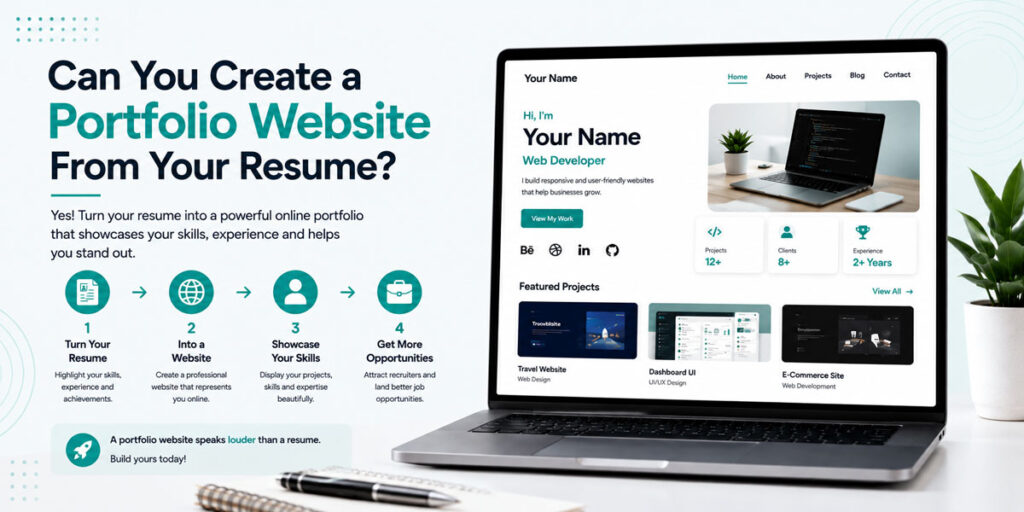
A portfolio website is a personal website where you showcase your professional background, skills, projects, achievements, education, experience, and other information relevant to your career. Unlike a traditional resume, which is generally limited by page length and formatting, a website gives you more flexibility to explain your work and demonstrate your capabilities.
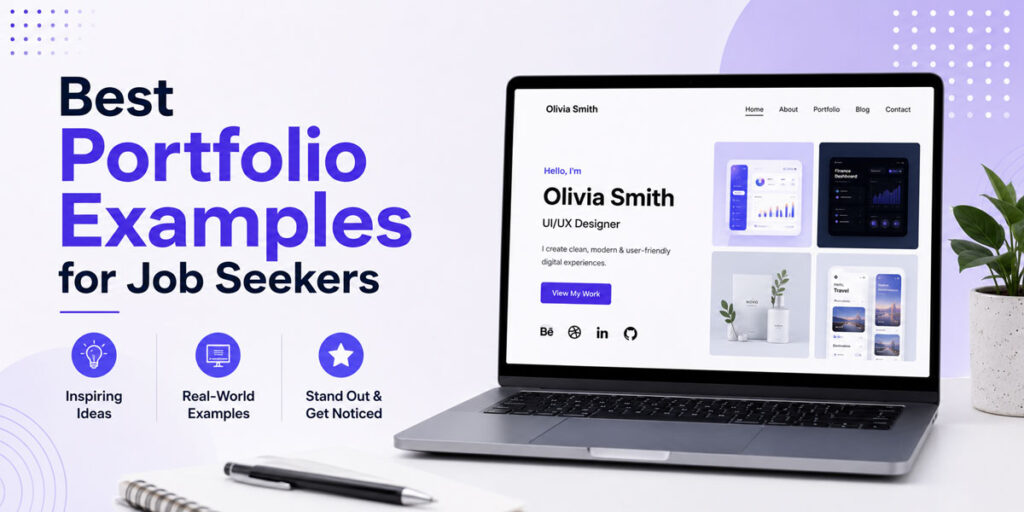
For example, a software developer can use a portfolio to showcase websites, applications, GitHub projects, and technical skills. A graphic designer can display branding projects, illustrations, advertisements, and creative work. A digital marketer can present SEO campaigns, social media strategies, advertising projects, and measurable results. Similarly, students can use portfolios to showcase academic projects, certifications, internships, extracurricular activities, and skills.
This makes a portfolio useful across many industries. You don’t have to be a designer or developer to benefit from having one. If your work, knowledge, projects, or achievements can help demonstrate your professional capabilities, a portfolio can give you another way to present them.
Why Is a Portfolio Website Important in 2026?
The modern job search is increasingly digital. Recruiters can discover candidates through LinkedIn, professional communities, job portals, referrals, social media, and online searches. Because of this, having a professional online presence can help you control how your professional identity is presented.
A portfolio website provides one central location for your professional information. Instead of sending a resume along with separate links to your projects, GitHub account, design work, certifications, or other platforms, you can provide a single personal portfolio URL that brings relevant information together.
This is especially useful for students and candidates who may not have years of professional experience. Your employment history may be limited, but you can still demonstrate your abilities through academic projects, personal projects, internships, certifications, freelance work, and other accomplishments. Learning how to build a professional online presence can therefore help you communicate your potential more effectively.
A portfolio can also help differentiate you from candidates who have similar qualifications. Two applicants may have the same degree and similar skills, but the candidate who can clearly demonstrate their projects and accomplishments through a professional portfolio may provide recruiters with more evidence to evaluate.
What Should a Professional Portfolio Website Include?
Creating a portfolio does not mean adding every detail about yourself. A good portfolio should focus on information that is relevant to your career goals and useful to the person viewing it.
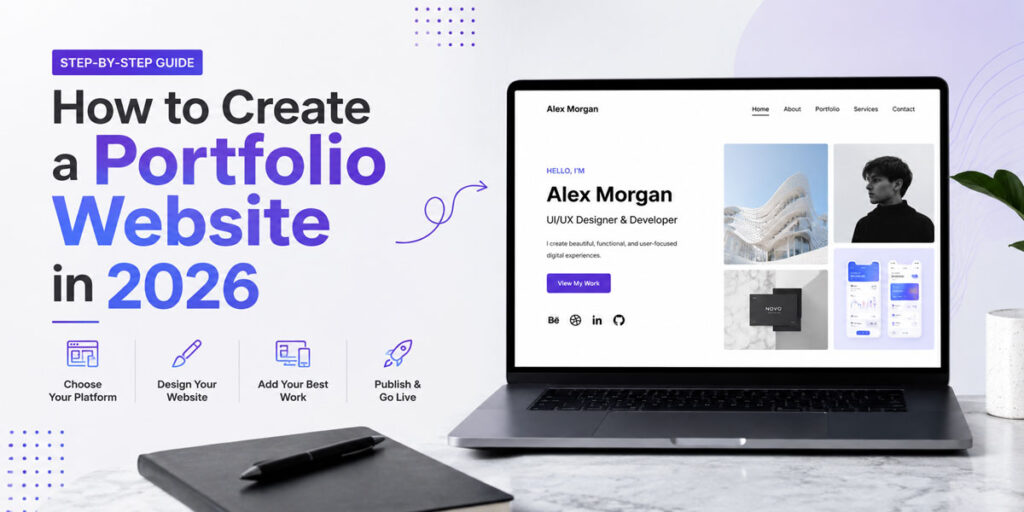
Your homepage should immediately communicate who you are and what you do. A clear professional headline can help visitors understand your area of expertise without having to search through the website. For example, instead of simply writing “Welcome to My Portfolio,” a developer could introduce themselves as a “Frontend Developer Building Responsive Web Experiences.”
The introduction should be followed by information that supports your professional identity. Your skills, projects, experience, education, certifications, and achievements can all play a role, depending on your background.
About Me Section
The About Me section gives visitors more context about you. However, it should not become a lengthy autobiography. Recruiters and potential employers generally want to understand your professional background, areas of interest, strengths, and career direction.
If you are a student, you can talk about your field of study, areas of interest, relevant projects, and the type of opportunities you are looking for. If you are an experienced professional, you can focus more on your specialization, professional experience, and the type of work you have delivered.
A strong introduction should feel professional while still giving the visitor a sense of who you are.
Skills and Expertise
Your skills section should be relevant to the roles or opportunities you want to pursue. Listing dozens of unrelated skills may make your profile look unfocused, so prioritize the capabilities that are most important for your target career.
For example, a web developer might highlight HTML, CSS, JavaScript, WordPress, React, and other development technologies. A digital marketer might focus on SEO, content marketing, social media, paid advertising, analytics, and marketing automation.
You can also organize your skills into categories to make the section easier to scan. This is particularly useful when you have both technical and professional skills.
Projects
Projects are one of the most important elements of a portfolio because they provide evidence of your skills. A resume may give you only a few lines to describe a project, while a portfolio allows you to explain the project in greater detail.
For each important project, describe the objective, your role, the tools or technologies you used, the challenges you encountered, and the final outcome. If the project is publicly available, include a link so visitors can explore it themselves.
Students should not assume that only professional client work belongs in a portfolio. Student projects for a portfolio can include academic assignments, final-year projects, personal experiments, hackathons, research projects, or other work that demonstrates relevant skills.
How to Create a Portfolio Website Without Coding
One of the biggest barriers for people creating a portfolio is the assumption that they need technical knowledge. While coding can give you complete control over a website, it isn’t the only way to create a professional online portfolio.
A portfolio website builder can provide templates, layouts, editing tools, and publishing functionality that allow you to create a website without developing everything manually. This can be particularly useful for students, job seekers, and professionals who want to focus on their content rather than spending weeks learning web development.
CampusCV is built around this idea. Instead of starting with a blank website, users can organize their professional information into a portfolio, select a suitable design, customize their profile, and publish it with a personal URL. This makes the process of creating a portfolio website without coding significantly simpler.
The most important thing is still the quality of your content. A portfolio builder can make the technical process easier, but you should spend time making sure your projects, skills, experience, and professional introduction accurately represent you.
How to Make Your Portfolio Recruiter-Friendly
A portfolio should be designed for the people who will actually view it. If recruiters are part of your target audience, they should be able to understand your profile quickly without navigating through unnecessary pages.
Start with a clean layout and clear navigation. Your name, professional title, strongest skills, and important projects should be easy to find. Avoid excessive animations, complicated navigation, or design elements that distract from your actual work.
Your portfolio should also be responsive. Many people browse websites using smartphones, so your professional portfolio website should work properly across mobile, tablet, and desktop screens.
Content quality is equally important. Avoid large paragraphs that provide little useful information, generic statements, or outdated achievements. Instead, focus on specific accomplishments and demonstrate your skills through real projects whenever possible.
How to Share Your Portfolio With Recruiters
Creating a portfolio is only useful if people can find it. Once your website is published, include your portfolio URL wherever relevant.
Your portfolio link on your resume can give recruiters access to additional information about your background and projects. You can also add the URL to your LinkedIn profile, email signature, job applications, freelance profiles, and professional social media accounts.
QR codes can provide another convenient way to share your portfolio. For example, you can place a QR code on a printed resume or business card that takes someone directly to your online portfolio.
The objective is to make your professional information accessible through a simple, memorable link rather than requiring someone to search for your work across multiple platforms.
How Often Should You Update Your Portfolio?
A portfolio shouldn’t be considered a one-time project. Your professional profile changes as you learn new skills, complete projects, earn certifications, gain experience, and achieve new milestones.
Make it a habit to review your portfolio regularly. Remove outdated projects when they are no longer relevant and add new work that better represents your current capabilities.
For students, this can be particularly valuable because their portfolio can grow alongside their education. A profile that starts with academic projects can eventually include internships, freelance work, certifications, competitions, and professional experience.
Final Thoughts
A portfolio website can be a powerful addition to your professional profile in 2026. It gives you more space than a traditional resume to demonstrate your skills, explain your projects, showcase achievements, and communicate your professional identity.
The most effective portfolio is not necessarily the one with the most complicated design. It is the one that makes your capabilities easy to understand and gives recruiters or employers meaningful evidence of what you can do.
If you don’t have the technical skills or time to build a website from scratch, a platform such as CampusCV can simplify the process. You can create a professional online portfolio, customize your profile, and share it through a personal URL.
Build your professional portfolio with CampusCV and turn your skills and experience into an online profile that is ready to share.