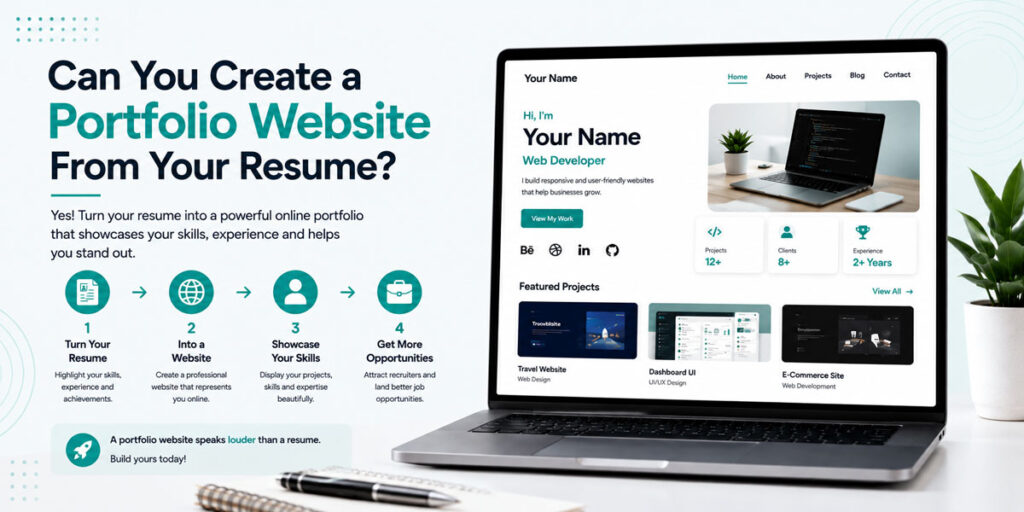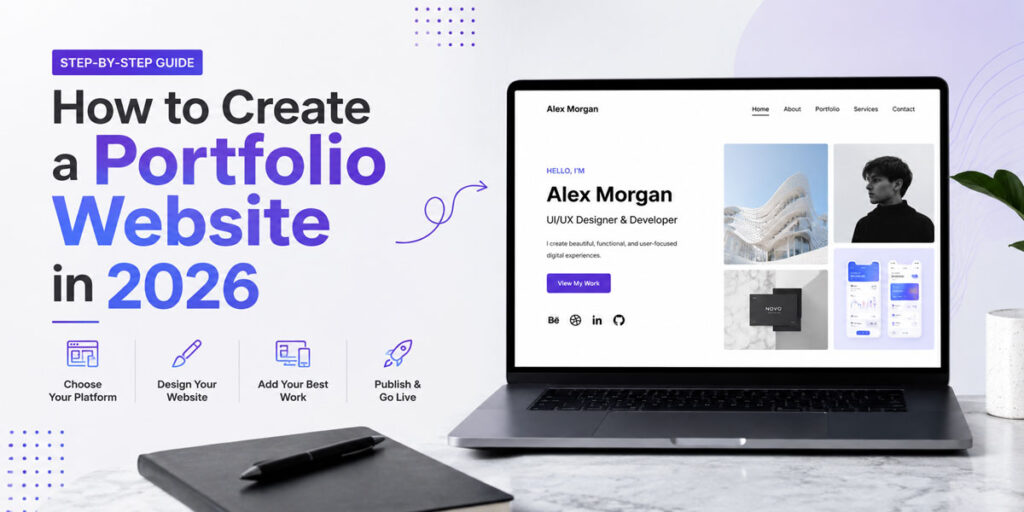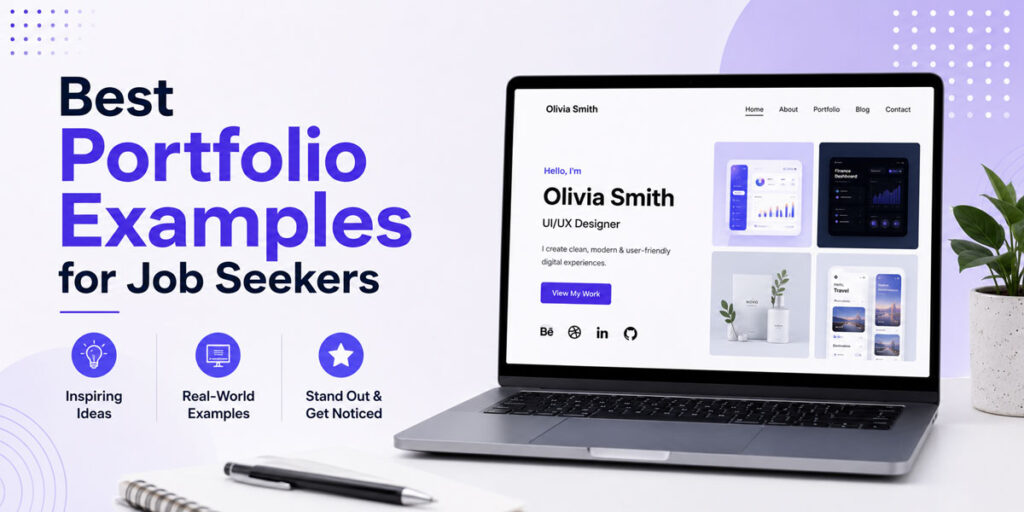
A resume is still one of the most important documents when applying for a job, but it doesn’t always give recruiters enough information to understand what you can actually do. A resume can tell an employer about your education, skills, and experience, but a professional portfolio website gives you the opportunity to demonstrate those skills through projects, work samples, achievements, and real examples.
This is why portfolios are becoming increasingly valuable for modern job seekers. Whether you’re a student looking for opportunities, a professional exploring a career change, a freelancer looking for clients, or an experienced candidate applying for a new position, an online portfolio can strengthen your professional presence.
The best portfolio examples are not necessarily the most visually complicated websites. A good portfolio focuses on clarity, relevant work, professional presentation, and an easy way for recruiters to understand the candidate’s capabilities.
What Makes a Good Portfolio for Job Seekers?
Before looking at different types of portfolios, it is important to understand what makes one effective. A portfolio should be created around the type of opportunity you want to pursue. The projects, skills, experience, and information you showcase should support your professional goals.
A strong portfolio should give visitors a quick understanding of who you are, what you specialize in, what you have worked on, and what you can contribute. The homepage should therefore have a clear introduction instead of making visitors search through different sections to understand your background.
Your portfolio should also be easy to navigate and work properly on mobile devices. Recruiters may view your profile from a laptop, tablet, or smartphone, so responsive design is essential. A professional appearance, clear typography, relevant visuals, and concise project descriptions can make the overall experience significantly better.
Most importantly, your portfolio should contain evidence. Instead of simply claiming that you have a particular skill, use projects and examples to demonstrate how you have applied that skill.
Developer Portfolio Examples
A developer portfolio is one of the clearest examples of how a portfolio can demonstrate professional capabilities. A resume might list programming languages and frameworks, but a portfolio can show the websites, applications, tools, and projects created using those technologies.
For example, a frontend developer could showcase responsive websites, dashboards, web applications, and interactive interfaces. A backend developer might highlight APIs, databases, server-side applications, or integrations. A full-stack developer can demonstrate complete projects and explain the technologies used across the frontend and backend.
Each project should provide enough context for the recruiter to understand your contribution. Instead of simply writing “E-commerce website,” explain what the project was designed to accomplish, which technologies were used, what challenges you encountered, and what you contributed to the final solution.
Including links to GitHub repositories or live projects can make your portfolio even stronger because recruiters can directly explore your work. If you’re a student, you can also create a developer portfolio for students using academic projects, personal applications, coding challenges, and other technical work.
UI/UX Design Portfolio Examples
For UI/UX designers, a portfolio can be even more important because visual work is difficult to communicate through a traditional resume.
A good design portfolio should showcase selected projects rather than every design you’ve created. Website designs, mobile applications, dashboards, prototypes, wireframes, design systems, and case studies can all be included depending on your experience.
However, simply displaying the final design isn’t always enough. Recruiters and design teams want to understand how you approach problems. A strong case study can explain the initial problem, research, user requirements, wireframes, design decisions, testing process, and final solution.
This approach turns your portfolio from a gallery of images into evidence of your design thinking and problem-solving abilities.
If you’re starting out, reviewing UI/UX portfolio examples can help you understand how experienced designers present their projects and structure their case studies.
Graphic Design Portfolio Examples
Graphic designers can use portfolios to visually communicate their creativity and technical abilities. Branding projects, logos, social media designs, packaging, advertisements, illustrations, posters, and other creative work can all be showcased.
The quality of the presentation matters. Avoid uploading large numbers of unrelated designs simply to make your portfolio appear full. Instead, select work that represents your strongest abilities and aligns with the type of opportunities you want.
For example, if you want to work with branding agencies, place branding and identity projects prominently. If you are interested in social media design, showcase campaigns, advertisements, and social media creatives.
Providing a short explanation alongside each project can also add valuable context. Explain what the project was for, what your role was, and what tools or creative techniques you used.
Digital Marketing Portfolio Examples
Digital marketing is another field where a portfolio can provide information that a resume cannot.
A digital marketing professional can showcase SEO campaigns, social media strategies, Google Ads campaigns, content marketing projects, email campaigns, analytics reports, and other marketing activities.
Whenever possible, include measurable results. Instead of simply stating that you managed an SEO campaign, explain what you worked on and what changed as a result.
For example, you could discuss improvements in organic traffic, keyword rankings, conversions, engagement, leads, or other relevant metrics. Of course, only use genuine results and avoid making claims that cannot be verified.
A portfolio can therefore help transform your experience from a list of responsibilities into a collection of measurable achievements.
Student Portfolio Examples
Students often assume that portfolios are only useful after gaining professional experience. In reality, a student portfolio website can be particularly useful because it provides a place to demonstrate skills before a candidate has built an extensive employment history.
Students can include academic projects, internships, certifications, competitions, research work, personal projects, volunteering, college activities, and relevant achievements.
For example, a computer science student might showcase a final-year project, coding applications, GitHub projects, technical certifications, and programming skills. A business student could present marketing research, business plans, presentations, case studies, and academic projects.
The objective is not to make your student portfolio look as though you have years of professional experience. Instead, it should demonstrate that you are actively learning, building skills, and applying your knowledge.
Portfolio Examples for Career Changers
A portfolio can also be highly valuable for professionals who are changing careers.
Imagine someone who has several years of experience in sales but wants to transition into digital marketing. Their existing resume may demonstrate communication and business experience but may not provide enough evidence of their marketing abilities.
A portfolio can bridge this gap by showcasing SEO projects, marketing campaigns, certifications, content strategies, sample advertisements, or personal projects completed while learning digital marketing.
This allows the candidate to demonstrate that the career transition is supported by actual skills and work rather than simply an interest in changing industries.
What Should You Include in a Job Seeker Portfolio?
The exact structure depends on your profession, but most job seekers can benefit from a clear introduction, skills section, projects, experience, education, certifications, achievements, and contact information.
The most important part is relevance. If you’re applying for a specific role, your portfolio should prioritize information that supports your application.
For example, a developer applying for a frontend position should highlight relevant development projects instead of unrelated college activities. Similarly, a marketing professional should prioritize campaigns, analytics, content, and marketing-related achievements.
You can also connect your portfolio to other professional platforms such as LinkedIn, GitHub, Behance, or Dribbble where relevant.
Common Portfolio Mistakes Job Seekers Should Avoid
One common mistake is trying to include everything. A portfolio with twenty average projects is unlikely to be more impressive than one with five strong and relevant projects.
Another mistake is writing vague descriptions. Statements such as “worked on different projects” or “responsible for designing websites” don’t tell recruiters much. Explain what you actually did and, where possible, provide measurable outcomes.
Poor navigation can also hurt the user experience. Your most important information should be easy to find without requiring visitors to explore multiple pages.
Finally, don’t allow your portfolio to become outdated. As your career develops, your portfolio should evolve with it.
Create a Professional Portfolio Without Starting From Scratch
Building a portfolio website manually can take significant time, especially if you don’t have experience with web development or design.
CampusCV provides a simpler way to create a professional portfolio for job seekers. You can organize your professional information, showcase your skills and projects, customize your profile, and publish it online using a personal portfolio URL.
This allows your portfolio to work alongside your resume and LinkedIn profile rather than replacing them.
Your resume provides the quick overview. Your LinkedIn profile provides your professional network. Your portfolio can provide the evidence behind your skills and experience.
Final Thoughts
The best portfolio examples have one major thing in common: they make the candidate’s capabilities easy to understand.
You don’t need an extremely complicated website or dozens of projects. You need a professional presentation that highlights your strongest skills, most relevant projects, experience, and achievements.
Whether you’re a student, developer, designer, marketer, freelancer, career changer, or experienced professional, a portfolio can help you create a stronger professional presence and give recruiters more information to evaluate.
Create your professional portfolio with CampusCV and give your next opportunity more than just a resume to consider.